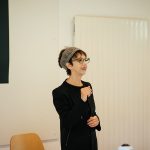

Jean-Christophe Bailly - Biography
Jean-Christophe Bailly, Ph. D., is a French writer, poet and playwright. He was born in Paris on May 3, 1949. Bailly is also an Art historian specializing in visual arts, especially paintings, as well as a director of collections and a teacher. He has taught the history of the formation of landscapes at the ENSNP (l'École nationale supérieure de la nature et du paysage) or in English the “National Superior School of Nature and Landscape” in Blois, in France since 2011. Bailly has edited Les Cahier de l’École de Blois (“The Journal of the School of Blois”) since 2003. He is a professor at the European Graduate School where he teaches an intensive summer seminar. Professor Jean-Christophe Bailly is famous for having said that “Les metteurs en scène passent. Les auteurs restent.” (“Directors fade. Authors remain”).
Jean-Christophe Bailly is best known for showing interest to and putting emphasis on all forms of art. As such he is the author of numerous monographs on contemporary art. Professor Jean-Christophe Bailly has also published many articles, prefaces and studies on photographers. He is the founder and director of review magazines. In 1974 he worked with Fin de siècle (“End of Century”), and ten years later Aléa (“Hazard”) published by the renown French publishing house Christian Bourgois. After that, he would take over a collection named “Détroits” together with the French writer Michel Deutsch (1948-). The French critical philosopher specialized in the thought of Heidegger, Derrida and Lacan, Philippe Lacoue-Labarthe (1940-2007).
Early on in his life, Jean-Christophe Bailly would decide to devote himself to writing. His autobiographical book Tuiles détachées (“Disconnected Tiles”), published in 2004 explains such a decision together with several important steps in the formation of his style. In his first few books we can see how close to Surrealism he was, only to move away from it eventually. His thought today is widely considered as constituting the continuity of modern ideas of German romanticism. It is the idea of a borderless meaning, whose constantly moving incarnations recall the great early German romantic philosophers and notions, such as for example what Novalis (pseudonym of Georg Philip Friedrich Freiherr von Hardenberg, 1772-1801) called the Encyclopedia. In Novalis’ Das allgemeine Brouillon, today published in English as Notes for a Romantic Encyclopaedia, the encyclopedic romanticism also present in Friedrich Schlegel at the time, gets close in a certain way to the systematic philosophy of German idealism taking place at the same time.
From 1983 and for 5 years he would be the literary editor of Éditions Hazan, a publishing house specialized in art books since 1946. There he would publish several monographs on contemporary artists such as the famous French-American Dadaist and Surrealist artist Marcel Duchamp (1887-1968). At the same time, the film director, actor and playwright Georges Lavaudant (1947 - ) would call his services to stage two plays: Les Céphéides (which would be Bailly’s first play) and translates as “Cepheid”, a variable star that has regular cycle of brightness. The second play would be Le Régent (“The Regent”). Since 1986 Bailly would also be supported by the renown French-Chinese actress Gilberte Tsaï who would participate in most of his shows, including, Turbulences (“Turbulences”), Voyages en Chine Intérieure (“Trips to Inner Mongolia”), and Tableaux Impossible (Impossible Paintings).
Professor Bailly would also write numerous essays such as in 1991 La Fin de l’hymne (“The End of the Hymn”), but also in 1997 Le Propre du language, voyages au pays des noms communs (“Language Itself: Journey to the Land of Common Nouns”). Or again Panoromamique (“Panoramic”) in 2000. He is the author of serveral books on theater: Poursuites (“Proceedings”), published in 2003. The work theorizes his relationship to comedy. In 2004 he would publish Tuiles détachées (“Disconnected Tiles”), which can be read as an autobiography of Bailly.
His books include: 2005, Le Champ mimétique (“Mimetic Field”). In 2007 Le Versant animal (“The Animal Side”). Jean-Christophe Bailly here deals with the “return” of the animal in philosophy. Instead of invoking “biodiversity”, he positions himself in the discourse of the heterogeneous multiplicity of life with endless variations by which the animal world unfolds. For maybe it is there, he ventures to suggest, that the full and wondrous conjugation of the verb to be takes place. Only with animals the infinitive of being is liberated of any rigid pose, releasing the infinite ways of living and thinking. There is a track, or rather tracks, that can only be followed in thought. That is precisely what is attempted here in this book, simply, as if for example on a road an animal bursts into the night, unexpected.
In 2009 he would write Le Temps fixé (“The Fixed Time”). In 2010 he would publish Dans L’étendu (Colombia-Argentina), which can translates as “In The Extended Space (Colombia-Argentina)”. Then in 2011 the French writer and playwright would win the writing prize Prix Décembre (one of France’s major literary awards). Jean-Christophe Bailly would acheive this accomplishment for his story entitled Le Dépaysement: Voyages en France (“Change of Scenery: Journeys in France”). Surprisingly, however, this would be a reward that he would end up having to share with another writer, Olivier Frebourg, because the jury would not manage to reach an agreement to decide which of the two finalists should win!
Not surprisingly, the subject matter of Le Dépaysement: Voyages en France is indeed France. The goal, moreover, is to understand what that word designates today, and whether it is right that it would by definition do so by being repressive. That is, that it can only designate something, here France, as that which necessarily does not exist elsewhere. Such is the argumentative questioning offered at the beginning of the work. However, to answer this question, which is by default a issue of identity, the author has chosen an unorthodox path. The answer does not come through an argumentative essay. Instead, Bailly has for three years traveled the country, taking in the landscape itself, which according to him include the elements of a possible answer. Boundaries, rivers, mountains, differences between north and south, but also layers of sedimentation of historical consciousness, all of which are encountered during his long journey and which he renders in a book that is meant to be first and foremost a description of the situation at a given time. The author takes us through a wide variety of places, from the most marked by history to the most discreet ones. In this way starts to emerge the stakes of a political issue that has recently resurrected, but which has been largely disfigured. Professor Bailly’s book plays its part in shedding light on identity politics in contemporary France and beyond.
Also in 2011, consciousness Bailly published a book in homage to the late French philosopher and former colleague Philippe Lacoue-Labarthe. The work, which is constituted of a collection of essays, is entitled La véridiction sur Philippe Lacoue-Labarthe (which can loosely be translated in to English as “Truth on Philippe Lacoue-Labarthe”). The possibility of a poem which, by destroying the traditional poetic pose, would give substance to a sentence whose diction (enunciation, dictation) would be a kind of stretched truth. Such a sentence, for Bailly, refers to what also in music with its interruptions (rhythm or silence) is the possibility that through them life remembers itself. Such was the extraordinary experience, condensed in this book, that of Philippe Lacoue-Labarthe linked his life to. This is the reflective space the three essays that make up this book examine in paying tribute to the important thinker.
Jean-Christophe Bailly is a professor of Philosophy at the European Graduate School in Saas-Fee, Switzerland, where he teaches an Intensive Summer Seminar.