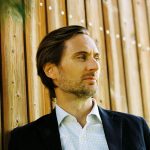

Caveh Zahedi - Quotes
I don’t really call it documentary either. I call it hybridization, I guess, when people ask me to describe my work. And I call it autobiographical, because that seems to encompass it all.
Zahedi, Caveh and Andrew Bujalski (Interviewer). "Show Me Love: An Interview with Caveh Zahedi" in: Filmmaker. Winter 2006.
I do think of what I do as performative, but I see any performance as having a conscious and an unconscious element, so I feel both of those are operative, and I feel they’re both necessary for the film to work. I’m interested in the performance of everyday life. I think that everyone is always performing. Adding a camera definitely complicates the performance, but it’s a question of degree rather than an ontological difference.
Zahedi, Caveh and Andrew Bujalski (Interviewer)."Show Me Love: An Interview with Caveh Zahedi" in: Filmmaker. Winter 2006.
I think life is really about negotiations, and that every act of will is a kind of violence. It’s very rare that another person wants to do exactly what you want to do, so you’re constantly trying to negotiate conflicting desires.
Zahedi, Caveh and Andrew Bujalski (Interviewer). "Show Me Love: An Interview with Caveh Zahedi" in: Filmmaker. Winter 2006.
For me the joy of filmmaking is really the joy of solving problems.
Zahedi, Caveh and Andrew Bujalski (Interviewer)."Show Me Love: An Interview with Caveh Zahedi" in: Filmmaker. Winter 2006.
And you can get really obsessive about fixing every flaw for a scene that you might not even end up using. We’d shoot a scene over and over and over and then finally just throw it away because it didn’t even fit.
Zahedi, Caveh and Andrew Bujalski (Interviewer). "Show Me Love: An Interview with Caveh Zahedi" in: Filmmaker. Winter 2006.
I think an orgasm is one of those kind of hidden truths. When I was younger I used to look at people on the street or subway and try to imagine them having an orgasm, and it was always very humanizing. It’s a very vulnerable thing, it’s a very ecstatic thing, it’s a very extreme thing. It’s a very uncontrolled thing where one’s facade is really let down. Also I think the orgasm is an objective correlative for what the whole film is. I guess I feel like what’s beautiful in art is excess, something irreducible that can’t be contained by the frame or by the story, and an orgasm is the perfect metaphor for that.
Zahedi, Caveh and Andrew Bujalski (Interviewer)."Show Me Love: An Interview with Caveh Zahedi" in: Filmmaker. Winter 2006.
It was important for me to represent sex in a non-titillating, non-pornographic and non-Hollywood kind of way. To show it in its awkwardness, its bumblingness, its humor and true strangeness. Because the film is so stylized, that came across in very odd ways rather than naturalistic ways. And yet that was definitely what I was going for — the truth about sex, I guess.
Zahedi, Caveh and Andrew Bujalski (Interviewer). "Show Me Love: An Interview with Caveh Zahedi" in: Filmmaker. Winter 2006.
I think I’m confronting people. There’s a certain series of norms in our culture that tell us what it is to be a good human being, and my films embody a refutation of a lot of those ideas, or at least a dramatization of a possible refutation. I think a lot of people respond on a real visceral level when they feel threatened in their deeply held assumptions of what is good and true.
Zahedi, Caveh and Andrew Bujalski (Interviewer). "Show Me Love: An Interview with Caveh Zahedi" in: Filmmaker. Winter 2006.
Personally, I’m interested in shifting the axes each time. Finding another way to be truthful and another way to be dishonest.
Zahedi, Caveh and Andrew Bujalski (Interviewer). "Show Me Love: An Interview with Caveh Zahedi" in: Filmmaker. Winter 2006.
For me, the therapeutic function is always at the level of the eternal combat that one is engaged in between one’s desire and one’s actuality. The struggle with the demon or the angel of the self and of art is always what it’s about.
Zahedi, Caveh and Andrew Bujalski (Interviewer). "Show Me Love: An Interview with Caveh Zahedi" in: Filmmaker. Winter 2006.
What interests me more is the challenge of trying to find a way to make it work on film.
Zahedi, Caveh and Peter Rinaldi (Interviewer). "A Public Service Announcement from Caveh Zahedi: An interview with the director of I Am A Sex Addict" in: Entertainment Insider. November 9, 2006.
That’s true. But this is by far the most embarrassing film I’ve made. It’s hard because I teach and, the first day of class, someone is always going to ask, “What was your last film about?” So with relationships on the student-teacher level it’s especially awkward.
Zahedi, Caveh and Peter Rinaldi (Interviewer). "A Public Service Announcement from Caveh Zahedi: An interview with the director of I Am A Sex Addict" in: Entertainment Insider. November 9, 2006.
I think people have become sophisticated enough that they actually watch everything with a double perspective. And I think cinema hasn’t caught up with the viewers in this case. I think my film does. I think people really appreciate that moment because they’re already doing that when they watch a movie. They’re already seeing it both as the actor and the character simultaneously.
Zahedi, Caveh and Peter Rinaldi (Interviewer). "A Public Service Announcement from Caveh Zahedi: An interview with the director of I Am A Sex Addict" in: Entertainment Insider. November 9, 2006.
For me, the whole question of rape in our society and how that affects our perception of our own sexual drives is really something no one talks about, and is really an important part of the shame and psychosexual dynamics of attraction.
Zahedi, Caveh and Peter Rinaldi (Interviewer). "A Public Service Announcement from Caveh Zahedi: An interview with the director of I Am A Sex Addict" in: Entertainment Insider. November 9, 2006.
It’s so painful to see what you’ve got and to try to make it work. And it’s so slow and it’s so lonely. I don’t like editing very much. I like the idea phase, when you come up with the ideas. That’s probably the most fun. And I just love the on-set-trying-to-get-it-right part. It’s definitely painful, but it’s also exhilarating.
Zahedi, Caveh and Peter Rinaldi (Interviewer). "A Public Service Announcement from Caveh Zahedi: An interview with the director of I Am A Sex Addict" in: Entertainment Insider. November 9, 2006.
But what I want is very simple: It might be a delusion, but if I can make a few films that are interesting to me and radical, but also commercially viable — which Sex Addictwas an attempt to do — then perhaps I’ll have enough money and clout to actually make the less commercial films. So it seems like something I shouldn’t do just yet, and then hopefully live long enough to do.
Zahedi, Caveh and Peter Rinaldi (Interviewer). "A Public Service Announcement from Caveh Zahedi: An interview with the director of I Am A Sex Addict" in: Entertainment Insider. November 9, 2006.
Confession, if it is authentic confession, implies that there is something unenviable about what one has to confess (otherwise it would be a form of boasting, rather than confessing). Interestingly enough, a lot of the film critics writing about I Am a Sex Addict accused me of boastfulness, which seems to me to be the exact opposite of what I am trying to do in the film—namely, confess).
Zahedi, Caveh and Gean Moreno (Interviewer). "A Cinema of Poverty: An interview with Caveh Zahedi" in: Fanzine. September 11, 2006.
I find it interesting that this celebrity cultural moment is such that what is experienced by oneself as shameful can be perceived by others as boastful, simply because it is being made public, and the public arena is the arena of envy.
Zahedi, Caveh and Gean Moreno (Interviewer). "A Cinema of Poverty: An interview with Caveh Zahedi" in: Fanzine. September 11, 2006.
What never ceases to amaze me is the inability of some critics to distinguish between the character I am portraying (which is me at a younger age) and the filmmaker who is making the film (which is me looking back on myself ten years earlier). I think whenever a film departs from the well-worn grooves of genre, personal projections tend to get triggered, as there are fewer recognizable landmarks to comfort the viewer. If you add material that is sensitive both emotionally and morally, and around which there tends to be a lot of personal trauma, you are opening the door to all kinds of usually repressed energies and paranoid fantasies to be unleashed in your direction.
Zahedi, Caveh and Gean Moreno (Interviewer). "A Cinema of Poverty: An interview with Caveh Zahedi" in: Fanzine. September 11, 2006.
Virginia Woolf once said something to the effect that she doesn’t try to write in a certain style, but rather her “style” emerges organically from what it is she is trying to say. For me, the meta-narrative elements in the film emerged organically as the film evolved.
Zahedi, Caveh and Gean Moreno (Interviewer). "A Cinema of Poverty: An interview with Caveh Zahedi" in: Fanzine. September 11, 2006.
Yes, I do relate to Michael Winterbottom, and admire both 24 Hour Party People and Tristram Shandy ... What I admire in Winterbottom is his willingness to take risks and to keep pushing the envelope. He also manages, unlike someone like Peter Greenaway (whose work I also admire), to pull this off (with the exception of 9 Songs) in a consistently entertaining way.
Zahedi, Caveh and Gean Moreno (Interviewer). "A Cinema of Poverty: An interview with Caveh Zahedi" in: Fanzine. September 11, 2006.
I got the idea for the film the night that I went to my first Sex Addicts Anonymous (SAA) meeting. I was blown away by the honesty and vulnerability of the other men in the room, and realized that I had never in my life heard men talking openly and honestly about their sexual problems before. I immediately realized the healing potential of making such a film, and decided that I wanted to do for other men what these men had done for me.
Zahedi, Caveh and Kristie Alshaibi (Interviewer). "Honest John: An Interview with Caveh Zahedi" in: Spread. Fall 2005.
I did have sex with escorts, but escorts were typically much more expensive.
Zahedi, Caveh and Kristie Alshaibi (Interviewer). "Honest John: An Interview with Caveh Zahedi" in: Spread. Fall 2005.
The truth is I still have tremendous shame about my sexual desires, and role-playing is something that requires a certain amount of courage and self-acceptance. I have courage, but I lack the requisite self-acceptance.
Zahedi, Caveh and Kristie Alshaibi (Interviewer). "Honest John: An Interview with Caveh Zahedi" in: Spread. Fall 2005.
My parents are from Iran, correct. I think my ethnic background has had a definite effect on my sexuality. First of all, Iranian culture is extremely puritanical sexually, and I definitely inherited that sense of shame and repression. Secondly, being an ethnic minority (as an Iranian-American) is hard sexually, because one always feels marginal to the culture’s notions of what is sexually attractive. For me, the result was a compounding of sexual shame and a feeling of inadequacy.
Zahedi, Caveh and Kristie Alshaibi (Interviewer). "Honest John: An Interview with Caveh Zahedi" in: Spread. Fall 2005.
I do still get tempted to solicit prostitutes, but only rarely, and less and less often. Basically, I get tempted when I’m extremely angry or upset. And for a variety of reasons, I seem to get less angry and upset than I used to, so the desire is not as strong as it used to be.
Zahedi, Caveh and Kristie Alshaibi (Interviewer). "Honest John: An Interview with Caveh Zahedi" in: Spread. Fall 2005.
I have nothing against non-monogamy morally speaking, but for me it never worked very well in practice. I personally find that the deep intimacy required to make a relationship work is severely compromised by the incredibly primal feelings of abandonment that come up whenever one person becomes sexually involved with a third party. Relationships are so much about trust, and trust is incredibly difficult to build. So, for me, why jeopardize something as delicate and fragile as trust? I’ve never met anyone evolved enough to be truly happy and intimate in a non-monogamous relationship, and I’m certainly not that person.
Zahedi, Caveh and Kristie Alshaibi (Interviewer). "Honest John: An Interview with Caveh Zahedi" in: Spread. Fall 2005.
Our culture has a false notion of what is “normal,” and a lot of suffering ensues from that. I think people really appreciate it when someone speaks out against the rampant dishonesty in our culture and tells it like it is.
Zahedi, Caveh and Kristie Alshaibi (Interviewer). "Honest John: An Interview with Caveh Zahedi" in: Spread. Fall 2005.
People think of my films as cathartic. But they're not to me, at all. I'm just trying to make a good movie.
Zahedi, Caveh and Johnny Ray Huston (Interviewer). "Just Lust: Caveh Zahedi Comes Clean" in: San Francisco Bay Guardian. June 2005.
Basically, my whole oeuvre comes out of a drug experience I had, an LSD experience during film school. I was trying to make Hollywood movies, but then I had this LSD trip that really changed my whole way of thinking about reality and the purpose of art. I decided it was more important to reflect reality as it is than to create these fantasies. I started on this path, and drugs were very important to me during that period — I would use them, like you say, to mark occasions, but also for inspiration.
Zahedi, Caveh and Johnny Ray Huston (Interviewer). "Just Lust: Caveh Zahedi Comes Clean" in: San Francisco Bay Guardian. June 2005.
Daily contemporary society is crazy-making, and we all have neurotic reactions to things that aren't human or humane, because we can't process our emotions in the face of this onslaught of technological change, alienated relationships, and complete political disempowerment.
Zahedi, Caveh and Johnny Ray Huston (Interviewer). "Just Lust: Caveh Zahedi Comes Clean" in: San Francisco Bay Guardian. June 2005.
I love Walter Murch. I love his mind, and I always learn a lot from listening to him speak. I have no particular interest in what software he uses, other than a craft interest, but I have a tremendous interest in his mind.
Zahedi, Caveh and BRAINTRUSTdv (Interviewer). "Metaphysician, Heal Thyself!" in: BRAINTRUSTdv. April 2005.
The viewer should have absolute power over his experience. A film isn't a sacred thing. It's just something designed to give pleasure. The pleasure is the point of it, and the viewer knows best what gives him or her pleasure.
Zahedi, Caveh and BRAINTRUSTdv (Interviewer). "Metaphysician, Heal Thyself!" in: BRAINTRUSTdv. April 2005.
The beauty of digital technology is that it democratizes the filmmaking process. Anyone can make a film now, and anyone can put it on a DVD and hand it to or mail it to anyone else. This is a very good thing and really and truly is the beginning of a revolution in the way films are made and seen. I'm all for it and feel that it is already having a very positive effect in the world.
Zahedi, Caveh and BRAINTRUSTdv (Interviewer). "Metaphysician, Heal Thyself!" in: BRAINTRUSTdv. April 2005.
I don't think the comedy in the film was a self-protective contrivance. I think the comedy was there to protect the audience.
Zahedi, Caveh and BRAINTRUSTdv (Interviewer). "Metaphysician, Heal Thyself!" in: BRAINTRUSTdv. April 2005.
As far as I can tell, Jesus was the most evolved human being to have been incarnated on this planet. I find his teachings to be astonishingly radical—so radical, in fact, that no one seems to even understand them, let alone practice them.
Zahedi, Caveh and BRAINTRUSTdv (Interviewer). "Metaphysician, Heal Thyself!" in: BRAINTRUSTdv. April 2005.
My background is in philosophy, and I was trained to be self-critical. This is a Marxist practice, and one that I've always found fascinating. To treat oneself as subject and as object at the same time is a curious relationship to the self, and one that most people don't seem to attempt.
Zahedi, Caveh and BRAINTRUSTdv (Interviewer). "Metaphysician, Heal Thyself!" in: BRAINTRUSTdv. April 2005.
Of course, I would rather be liked. But being liked isn't my goal any more than being judged negatively is my goal. My goal is to be as honest as I can be.
Zahedi, Caveh and BRAINTRUSTdv (Interviewer). "Metaphysician, Heal Thyself!" in: BRAINTRUSTdv. April 2005.
Our society has become increasingly fake. People's interactions are increasingly fake. Television is increasingly fake. And advertising is a big part of it. I think people really crave the genuine article. It's a really healthy impulse that people are more interested in reality than artifice. Reality does get alloyed with artifice but I think the trend is good.
Zahedi, Caveh and Craig Phillips (Interviewer). "Tripping with Caveh Zahedi" in: GreenCine. May 2004.
Any exposure is really better than none. If you write a book, people may use it for toilet paper if they want to, but they may happen to read some of it in the process. You can't really control what people do. You just put your stuff out there and hope.
Zahedi, Caveh and Craig Phillips (Interviewer). "Tripping with Caveh Zahedi" in: GreenCine. May 2004.
I know Godard pretty well, know how he would have done things, at certain phases of his career. So there are times I may think, "Should we do it the Godard way or the other way?" But I'll usually try to find some new way that other people haven't done.
Zahedi, Caveh and Craig Phillips (Interviewer). "Tripping with Caveh Zahedi" in: GreenCine. May 2004.
For me, reality is "of God," and insofar as film documents reality, it's basically documenting God. And in that sense it's religious.
Zahedi, Caveh and Chris Chase (Interviewer). "Shaman of the New American Cinema" in: Ox Quarterly. Winter 2000.
I really believe in process art. I like art that is about process as much as the final product. I'm always trying to make films that, in the making of the film itself, somehow improve my life or relationships. In that sense, I'm always putting myself on the line.
Zahedi, Caveh and Chris Chase (Interviewer). "Shaman of the New American Cinema" in: Ox Quarterly. Winter 2000.